Dress for the whole route
Rainy-day dressing becomes easier when you picture the route rather than the weather icon alone. A short walk to a car, a crowded bus journey, and twenty minutes on foot demand different decisions. Consider where water will actually reach you: shoulders, lower legs, bag opening, and shoe uppers. Then decide which existing pieces can tolerate those conditions without special rescue work afterward.
A dark trouser and a light knit can be an uncomplicated base for a working day, but the trouser hem needs attention. A wide leg that brushes the pavement can collect water even beneath a good coat. Try the full outfit with the intended shoes and see where the hem falls. Choosing a shorter existing pair can be more useful than buying another rain accessory.
Read the outerwear description carefully
A coat that looks technical is not automatically waterproof. Water resistance and waterproofing are different claims, and the specific product listing should explain what the maker promises. UNIQLO's official outerwear collection is a starting point for comparing styles, but you still need to read an individual garment's description, composition, and care instructions. A fashion trench with no rain claim may work for a brief shower without being suitable for a long wet walk.
Also check room for layers. Fasten the coat over the clothes you will wear underneath, reach forward, and raise an arm. Restriction across the shoulders can make carrying an umbrella or boarding transport awkward. A hood is useful only if it stays positioned comfortably and leaves enough visibility. Do not choose extra length automatically; a longer coat may offer coverage while catching on stairs or becoming cumbersome when seated.
Keep the lower half manageable
Shoes need to suit both the weather and the distance. Look for the maker's material and care guidance; do not assume a leather shoe, fashion boot, or chunky sole is designed for rain. If you already own a pair you reserve for wet conditions, begin there. Choose trousers that let you move comfortably without dragging. Socks that remain in place can make a bigger difference to the commute than a new fashion detail.
A skirt can work on a wet day if the hem stays clear of the ground and the fabric is suitable for your plans. Check how it behaves under the coat: bulky gathers can make the closed coat uncomfortable, while a narrow skirt can restrict long steps. Try walking up a stair before leaving. Keep a dry pair of socks at work if your route frequently leaves shoes wet, but avoid relying on an emergency spare to justify a consistently unsuitable pair.
Protect what the bag carries
Empty your everyday bag and identify what needs protection: a laptop, paper notebook, medication, or anything sensitive to water. A zip closure can limit an open top, but it does not make an ordinary bag waterproof. Use the protection recommended for the item you carry and avoid placing electronics where rain can enter easily. If your current bag works, an internal pouch may solve the organization problem without a replacement.
Think about the load as well. Carrying an umbrella, a shoulder bag, and a coffee leaves very little room to manage a door or hold a rail. A hands-free option can help, provided the strap suits your body and the bag does not bump uncomfortably while walking. Coach's tote collection is useful for reviewing bag shapes and closures, but each listing needs its own capacity check; a stylish exterior is not a weather specification.
Make arrival and drying part of the plan
At your destination, give the coat somewhere to air rather than immediately pressing a wet surface against clean clothing. Follow the care label when dealing with damp fabric, and keep drying garments away from direct heat if the maker advises it. Shoes should also be dried according to their care instructions. Stuffing or heat methods that work for one material may damage another.
Before buying, ask whether the real problem is coverage, length, footwear, or carrying capacity. Each calls for a different solution. A new coat will not fix a trouser hem that trails in puddles, and a large tote will not reduce the number of things in your hands. Keep the outfit's color palette simple if that makes mornings easier, then add personality with the clothes already underneath. Rain planning is successful when you arrive comfortable and can continue your day, not when every piece has been replaced with outdoor gear.
A quick doorway check
Before leaving, close the coat, put the bag on, and hold the umbrella as you normally would. Can you reach your keys without setting everything on wet ground? Can you use a handrail? If not, move essentials to an accessible pocket or reduce the number of objects in your hands. The check should take a minute and can prevent an awkward commute.
What if the forecast changes during the day? Choose an under-outfit that works without the rain layer. A removable coat is useful only when the clothing beneath is comfortable in the warmer conditions. If the route regularly alternates between wet streets and overheated transport, a manageable layer and a hem that stays clear of water can matter more than adding thickness. Check the evening forecast before deciding which coat to take.
Options to consider
Use these retailer collections as starting points. Check the current product description, sizing, delivery and return terms before ordering; availability and prices can change.
Sources & further reading
Official information checked October 8, 2026. This guide presents research-based editorial advice, not a claim of hands-on product testing.
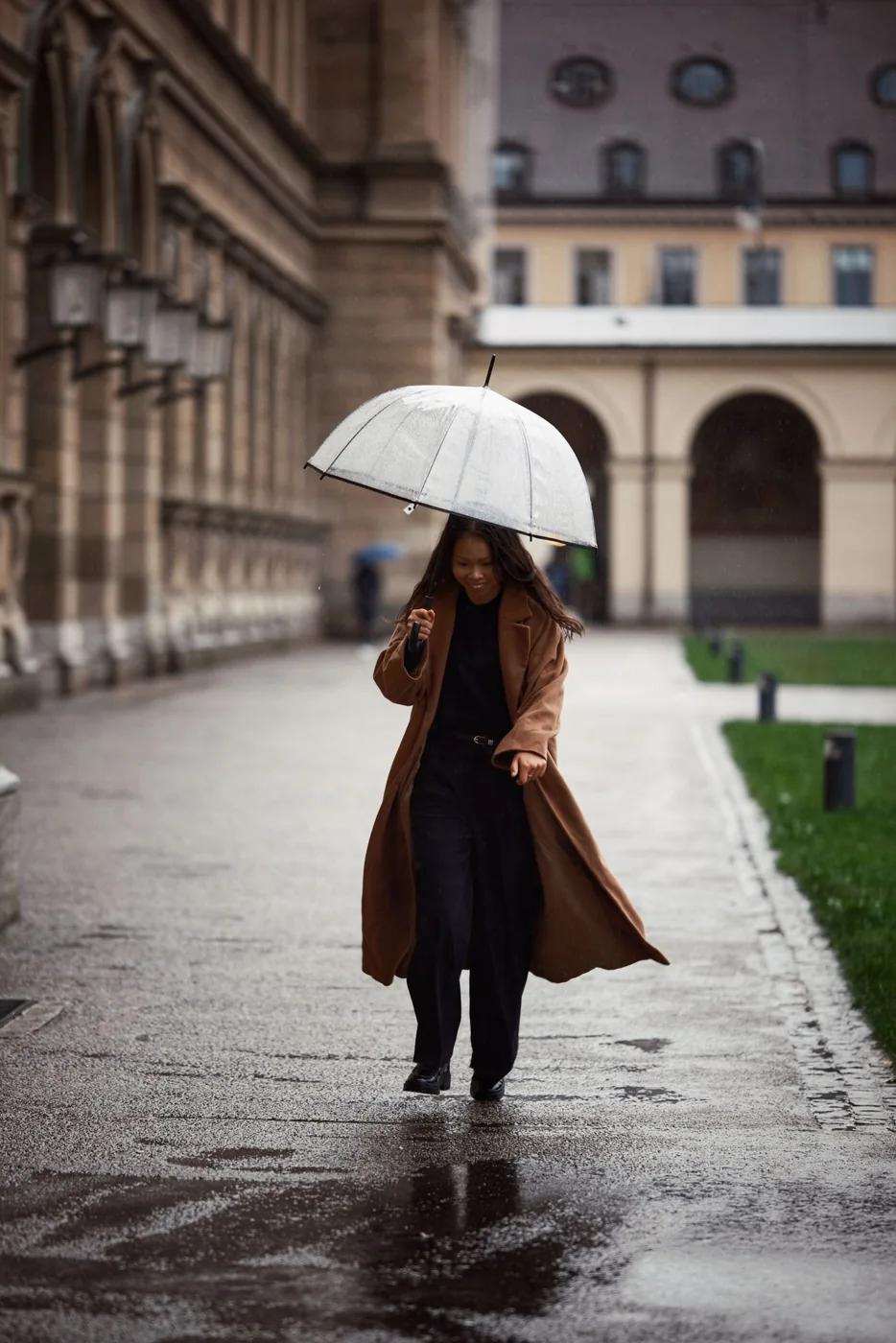
Illustrative stock photograph by Michael Obstoj: photo source. This scene does not identify our author or establish a product test.