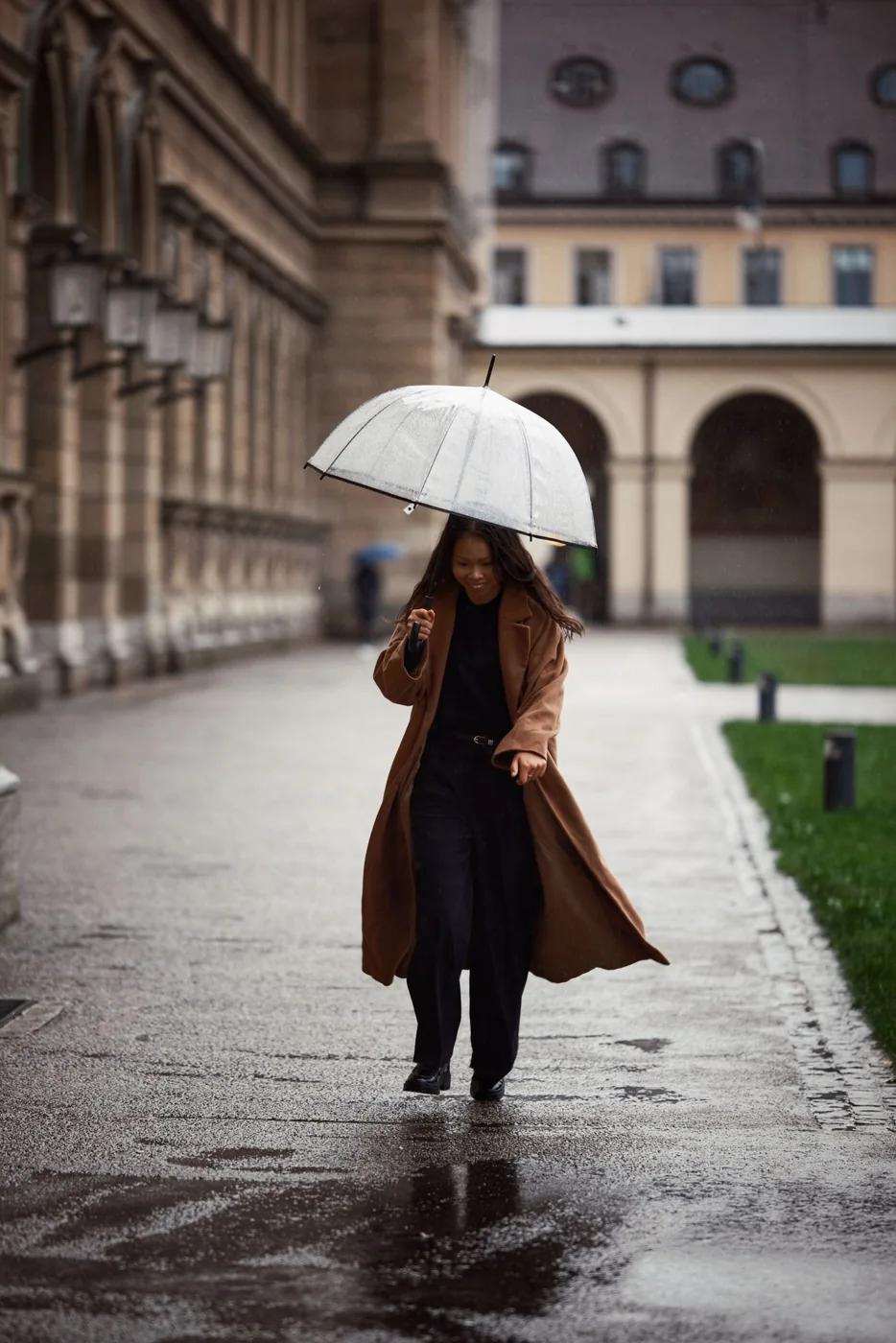
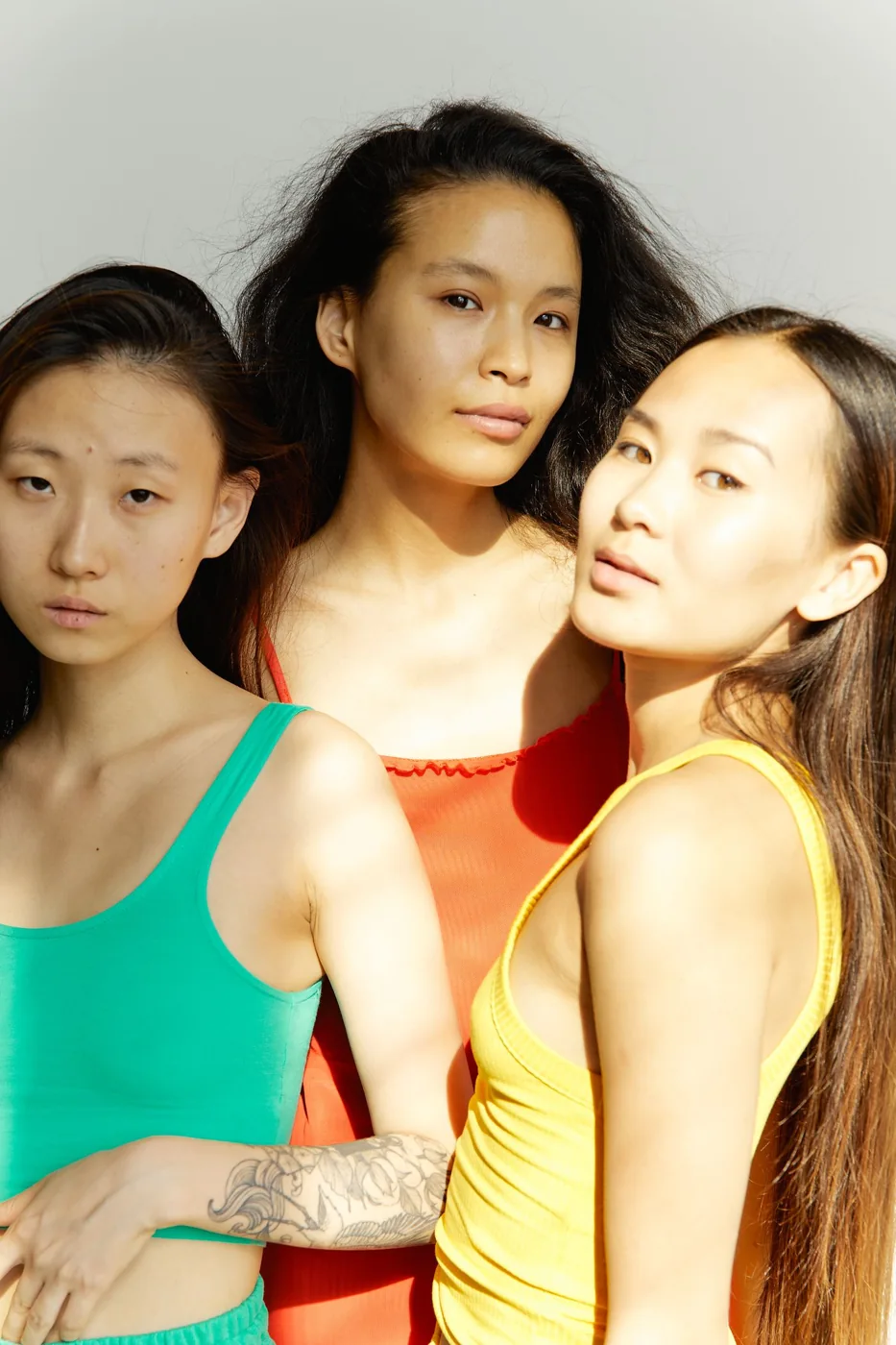
Start with the colors already doing the work
A wardrobe can feel repetitive without needing a full replacement. If most of your clothes are navy, charcoal, cream, or denim, those pieces are a useful foundation for trying color. Lay out several complete outfits you already wear rather than looking only at individual garments. Notice which colors repeat naturally and which pieces you reach for because they make getting dressed easy.
Then choose the mood you want to add. A deep green, warm coral, clear blue, or muted plum can change an outfit in different ways, but none is a mandatory seasonal color. Pick something you enjoy seeing beside your existing clothes. The aim is to make the outfits more personal, not to prove that you can follow a color theory diagram.
Try the smallest useful dose
Begin with one visible detail: a top, a scarf you already own, socks, or a bag. A colored top makes a larger visual change than socks, so choose the level that feels comfortable. Put it with a complete outfit and look at it in ordinary daylight. Some colors shift noticeably between a store's lights and home, which is a reason to check rather than a reason to distrust your preference.
Use repetition only if you like the result. A small echo of the same color in an accessory can make a combination feel intentional, but matching every detail can feel overly planned. A blue top with blue socks does not need a blue bag as well. Let one piece do the work and give the rest of the outfit some quiet space. You can always add another detail after wearing the first version through a day.
Compare combinations before adding more
Try the color with three bottoms you already own. For example, a green shirt might work with dark jeans, cream trousers, and a charcoal skirt. If it works only with the outfit you imagined from a retailer photograph, assess whether that single use is enough. A highly specific piece can be enjoyable, but it should not quietly turn into a chain of purchases needed to support it.
Check the garment's shape as carefully as its color. A beautiful shade in an awkward sleeve or neckline is still an awkward item. If the color is the attraction, search for another cut that fits your routine instead of accepting poor comfort. J.Crew's official shirts and tops collection can help you compare different silhouettes; Nordstrom's skirt collection offers another place to introduce color if you prefer to keep your tops familiar.
Make room for texture and contrast
A color can feel different in matte cotton, a smooth knit, or a fabric with sheen. Compare the material as well as the swatch. A saturated satin-like surface may feel more occasion-oriented than the same color in a plain shirt. That can be useful if you want a dinner piece, but less useful if the goal is an everyday work option. Read the composition and care guidance on the specific listing rather than relying on the styled image.
If you are uncertain, keep the outline simple. Familiar trousers and familiar shoes make it easier to tell whether you like the new color itself. Changing color, silhouette, and accessories all at once creates too many variables. Photograph a couple of combinations if it helps you remember them, but prioritize how the clothes feel on your body and in the settings where you will actually wear them.
Buy slowly enough to learn
Wear the first successful combination more than once before expanding the idea. Notice whether the colored piece becomes an easy choice or requires persuasion every morning. If you enjoy it, consider another item only when it has a separate role. Two tops in the same shade can be redundant; a lighter layer in that color might serve a different season, but only if you genuinely need the layer.
Keep a small note of combinations that worked. This is particularly helpful when a brighter item gets put away for a while and you forget how you liked wearing it. Check care requirements before buying a color that might need separate washing, and follow the label rather than assuming a dark or vivid shade behaves one way. The most useful outcome is a wardrobe that feels more like yours while most of the clothes remain the ones you already own.
A useful color experiment
Wear the new combination somewhere ordinary before deciding to build around it. A coffee outing or workday can reveal whether you enjoy the shade in your usual surroundings. Notice whether you reach for it again naturally. A color that looks exciting on a shopping page may feel less appealing against your actual coat, bag, or favorite shoes.
What if the color works but the garment does not? Keep the color idea and reject the poor fit. Look for the shade in another item only if the purchase still fits your budget and wardrobe. You can also try a similar color in something already owned. There is no need to keep an uncomfortable blouse simply because it proved that you like green. Separating the color preference from the particular garment makes the experiment more informative.
Options to consider
Use these retailer collections as starting points. Check the current product description, sizing, delivery and return terms before ordering; availability and prices can change.
Sources & further reading
Official information checked October 8, 2026. This guide presents research-based editorial advice, not a claim of hands-on product testing.
Illustrative stock photograph by Darina Belonogova: photo source. This scene does not identify our author or establish a product test.